Second-Order Effects on Cancer Treatment Efficacy
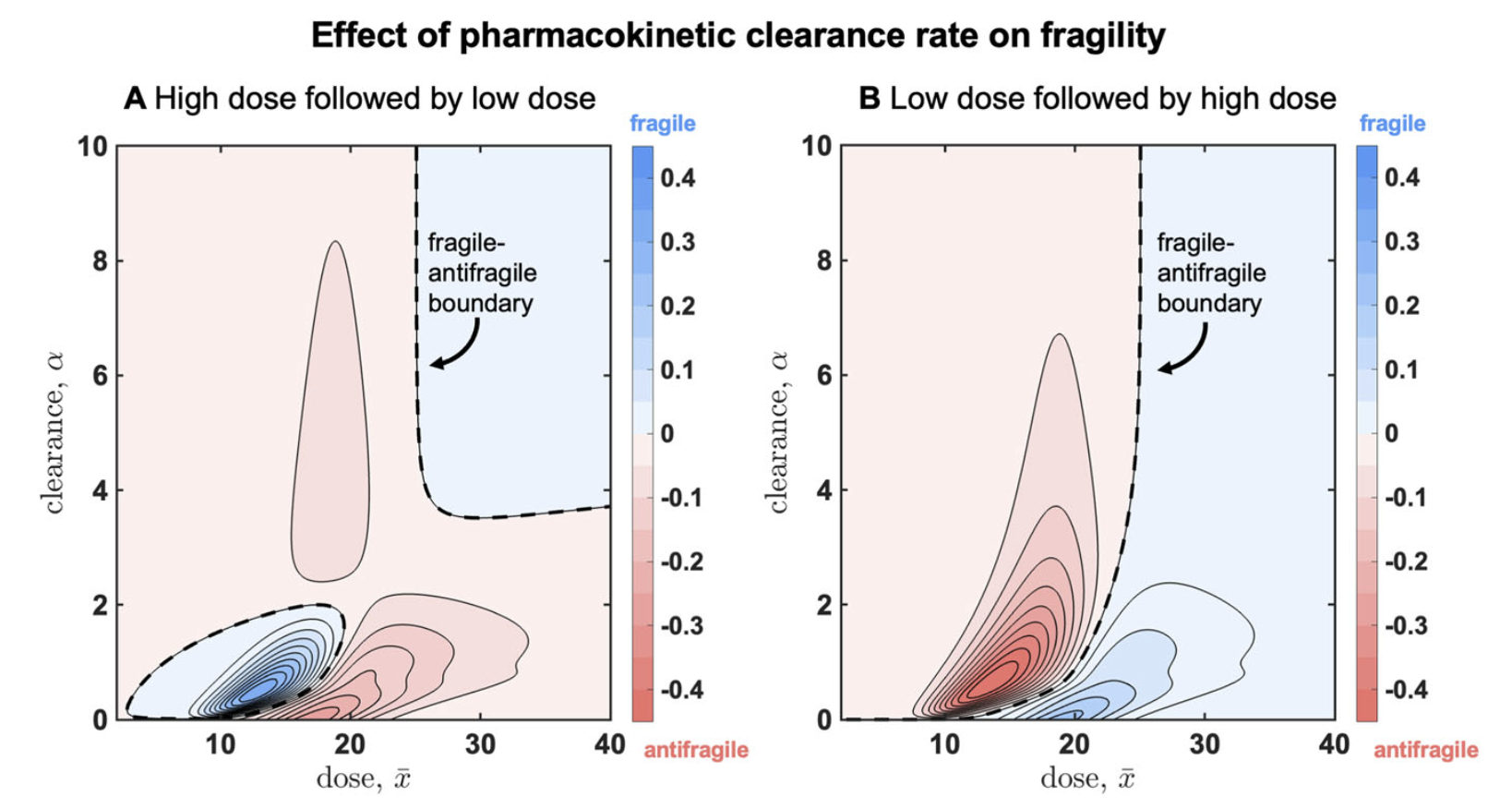
Until 2025, my research focus had been in mathematical biology, specifically oncology and population dynamics, and in Spring 2024, I published my first paper alongside my mentor Jeffrey West at the Moffitt Cancer Center in Tampa, Florida. Here we completed some analysis and simulations for different deterministic models of cancer proliferation and repression to determine when a tumor will respond positively (or negatively) to increased treatment variability. We characterized the benefit gained from treatment variability through a so-called “fragility metric” and found that higher treatment variability benefited smaller tumors and lean mass preservation. This result contributes to a growing body of literature challenging the standard-of-care procedure that uniformly delivers a maximum tolerated drug dose to cancer patients, and instead promotes new, individualized therapies which treat a patient’s unique disease profile.